

Journal · Training
How to Keep Easy Sessions Easy in the Heat
Warmer weather can change how a familiar run or ride feels. Here's how to adjust your training, prepare for hot conditions and keep your easy sessions under control.
It's been a while since the last journal entry. I've been busy chasing the sun on the bike and doing a bit of learning along the way. There's always something to take back into my own training and the way I coach, and lately I've been reading about how we adapt to training in the heat.
It felt like a good topic to return with as we head towards summer. Most of us know the feeling. You head out for an easy session on a familiar route. The first few kilometres feel comfortable. Then the sun gets higher, the shaded sections become shorter and the effort starts to creep up. You check your watch or bike computer. You're doing the same pace or power you usually manage comfortably, but today it takes more work.
This is where a training plan needs a little flexibility. The purpose of an easy session still matters when the weather changes. If maintaining your usual numbers turns it into a harder workout, adjusting them helps you deliver the session you actually planned.
Why familiar numbers can feel harder
Exercise produces heat. Your body releases some of it through increased blood flow to the skin and the evaporation of sweat. Warm conditions make that process more demanding, and humidity can limit how effectively sweat evaporates. Sun exposure and air movement also influence the heat load you experience. [1, 3]
That's why the temperature alone gives an incomplete picture. A shaded route with moving air can feel very different from an exposed road on a still afternoon. On the bike, the airflow you get at speed can help cooling, while a slow climb changes that situation. [3]
When reviewing a session, give the conditions a place alongside the numbers. A slower run in warm, humid weather may still have delivered the easy aerobic work you intended.
What the latest running study adds
A study published on 2 November 2026 followed 18 highly trained runners, including ten women and eight men. Each completed two blocks of seven sessions in a randomised crossover design. One block involved running at 40°C and the other at 22°C. Both used 60-minute sessions at the same prescribed workload. [2]
The hotter block produced greater reductions in heart rate and core temperature across the sessions, together with a larger increase in sweat rate. The researchers detected no difference between women and men in the overall magnitude of heat adaptation.
The study measured physiological responses, rather than race performance. Its small sample also limits how confidently we can generalise the findings or rule out differences between sexes. It adds evidence for adaptation in trained runners, while the one-hour, 40°C laboratory protocol needs to stay in that context.
Broader consensus guidance supports repeated exposure over roughly one to two weeks when preparing for competition in the heat. The appropriate approach depends on the athlete, their training background and the conditions they expect to race in. [1]
Keep an easy session conversational
For everyday training, begin with the purpose of the session. If you're heading out for an easy run or ride, aim to finish with that same intention intact.
Use comfortable conversation and your sense of effort alongside heart rate, pace or power. If talking becomes harder and the effort keeps rising, ease back. On a run, that may mean slowing down or including a short walk. On a ride, it may mean using an easier gear and allowing the power to fall on a climb.
Avoid chasing a precise pace adjustment based on temperature alone. There is too much variation between athletes, routes and conditions for one correction to suit everyone. Treat your usual numbers as useful context and respond to what the session is asking of you today.
These are practical coaching applications. The new study did not test a specific talk-test rule or prescribe a universal heart-rate cap.
Fit heat preparation around the training week
For an experienced athlete preparing for a hot event, planned exposure can have a place in the program. Discuss the timing with your coach and build it around the training you already do. Allow the extra environmental stress to influence the session's duration and intensity. [1]
For someone building consistency or returning to running, the immediate priority is a manageable progression. Cooler times of day and shaded routes make it easier to control the workload. Deliberate heat exposure can be considered later if the event demands it.
As a coaching example, an easy ride planned for an exposed route might become a shorter loop with a refill stop and the option to finish early. A runner might choose a shaded circuit that passes home. These choices make it easier to adjust while you're out.
Plan your drinks and your recovery
Begin training adequately hydrated and consider where you'll get fluids on the route. Match your approach to the session length, conditions and your own sweat losses. Overdrinking also carries risks, so forcing large volumes is a poor strategy. [1]
On longer sessions, make access to drinks part of the plan. For cyclists, that could mean carrying enough bottles and identifying a refill point. For runners, a loop past a water source can make the practical side easier.
Afterwards, take a moment to record how the session went. A short note such as "sunny, humid, effort rose on the final climb" adds context that average power cannot provide. Include whether you had enough to drink and how you felt later that day. Those notes help a coach judge what to adjust next time.
Know when to finish early
Stop and seek shade and cooling if you feel dizzy, nauseous or unusually weak. Confusion, collapse or difficulty coordinating movement require urgent medical help and immediate cooling. Heat illness can progress quickly, and sweating does not rule it out. [4]
The session should leave you able to recover and continue your week. For COL DE SUD athletes, that means having enough flexibility to shorten a ride, slow a run or change the route when conditions demand it. Consistent training depends on making those decisions as well as completing the work.
Sources
- Racinais S, et al. Consensus recommendations on training and competing in the heat. British Journal of Sports Medicine, 2015. Read the consensus statement. DOI: 10.1136/bjsports-2015-094915.
- Keefe MS, et al. Physiological Adaptations to Controlled Work Rate Heat Acclimation Do Not Differ Between Highly Trained Male and Female Endurance Runners. Journal of Applied Physiology, published online 2 November 2026. Read the study abstract. DOI: 10.1152/japplphysiol.90119.2026.
- Racinais S, et al. IOC consensus statement on recommendations and regulations for sport events in the heat. British Journal of Sports Medicine, 2023, 57, 8–25. First published online in September 2022. Read the IOC consensus statement. DOI: 10.1136/bjsports-2022-105942.
- ACSM Expert Consensus Statement on Exertional Heat Illness: Recognition, Management, and Return to Activity. Current Sports Medicine Reports, April 2023, 22(4), 134–149. Read the consensus abstract. DOI: 10.1249/JSR.0000000000001058.
— Phillipe Cossey
Founder · Col de Sud, Ara Maunga
Every athlete has a mountain. Find your path.
— About the author
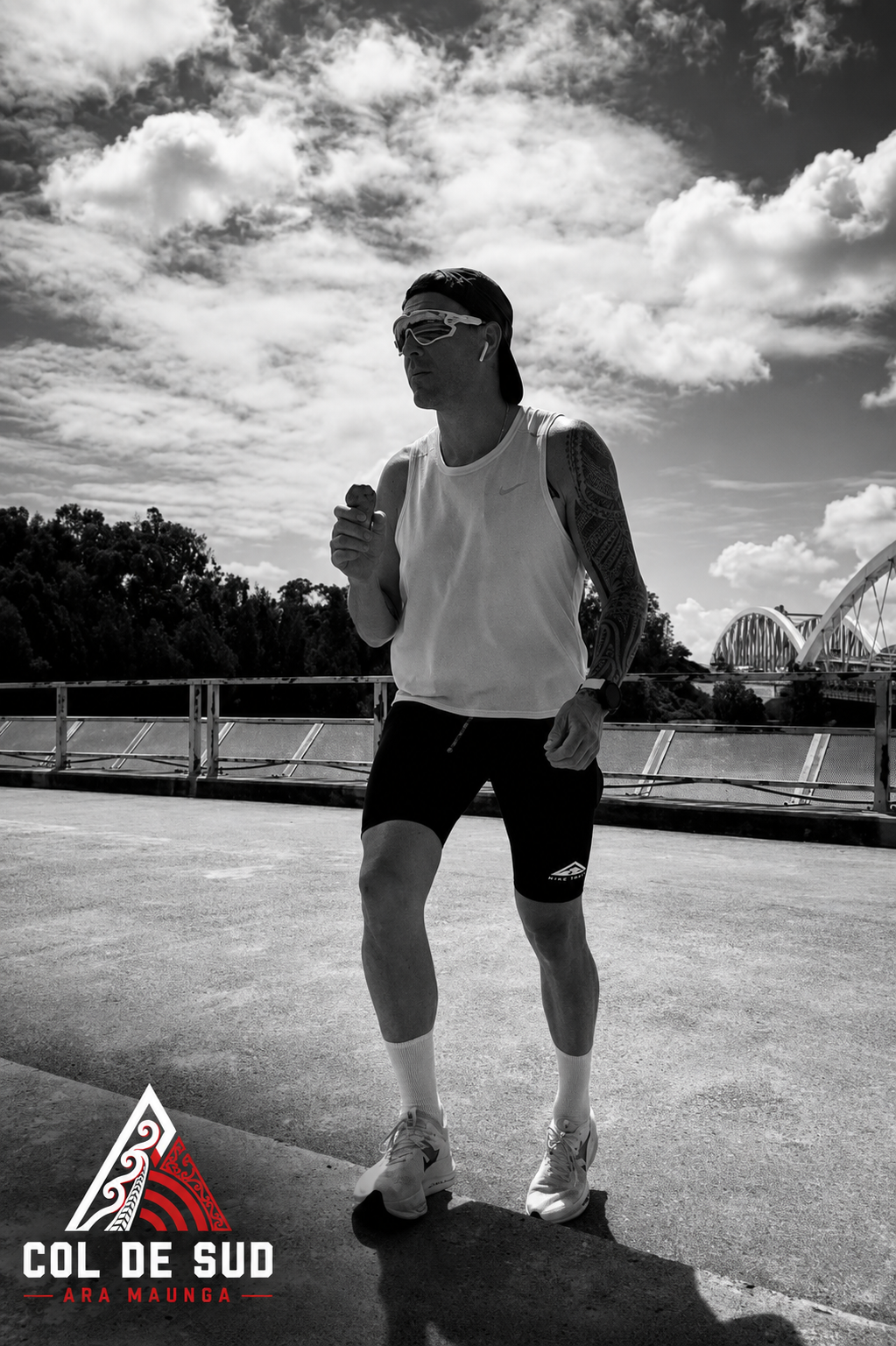
Phillipe Cossey
Runner. Cyclist. Triathlete. Founder of Col de Sud.
I believe endurance sport isn't just about racing faster.
It's about becoming stronger through the process.
I've spent years training for endurance events, learning through experience, embracing consistency and discovering that every athlete has their own mountain to climb.
The Col de Sud Journal is where I share those lessons to help others enjoy the journey.
— Your next step
Ready to climb
your mountain?
Every athlete has different goals, different schedules and different challenges.
Whether you're training for your first 10km, your next marathon, a Gran Fondo or an Ironman, I'll build a personalised training program around your lifestyle, experience and goals.